The platform
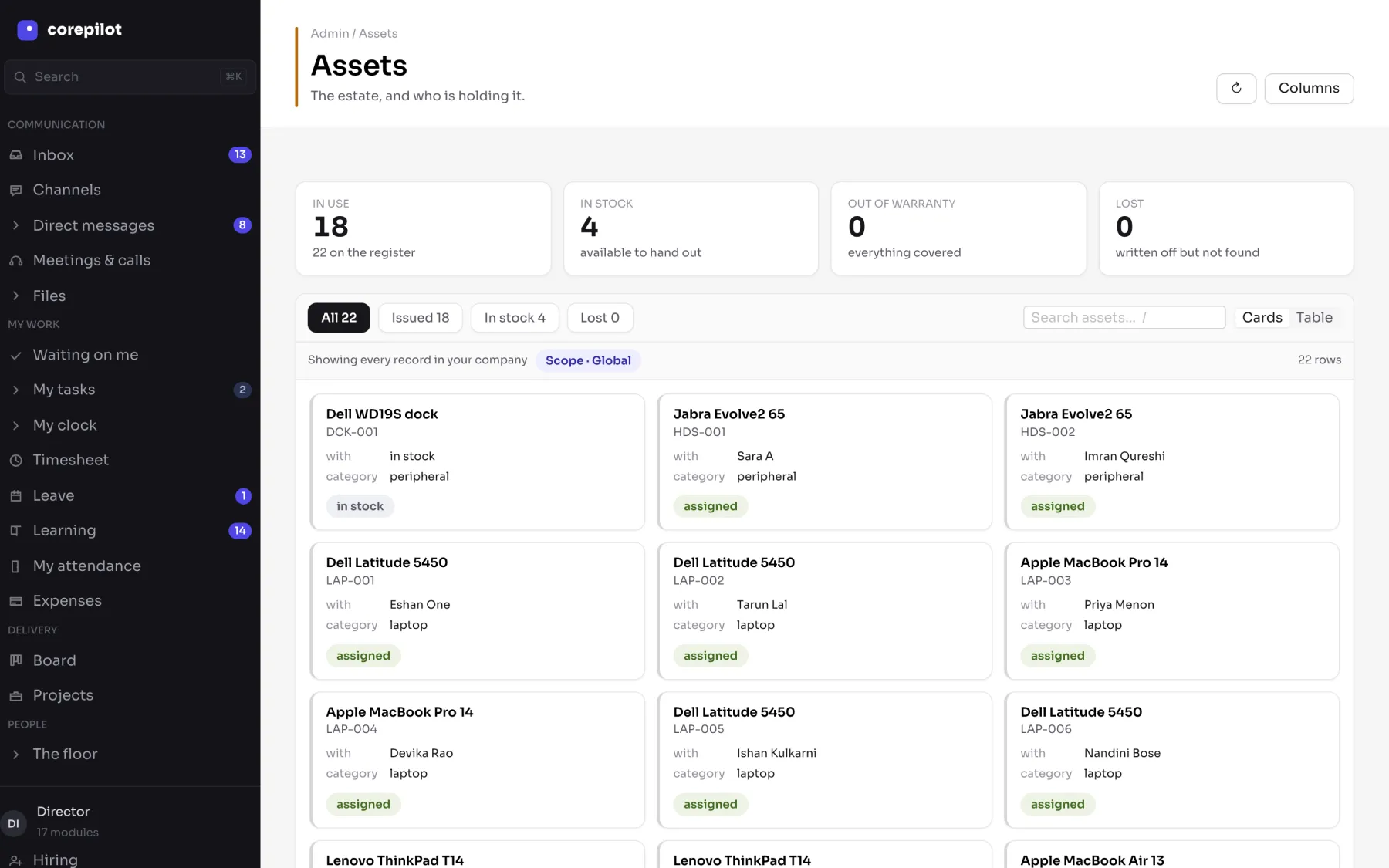
Sixteen modules, one set of records
Grouped by what they do rather than by which team bought them. The point is not the count — it is that there is only one copy of every hour, every person and every rupee.
People
One record for a person, and four modules that never had to be told.
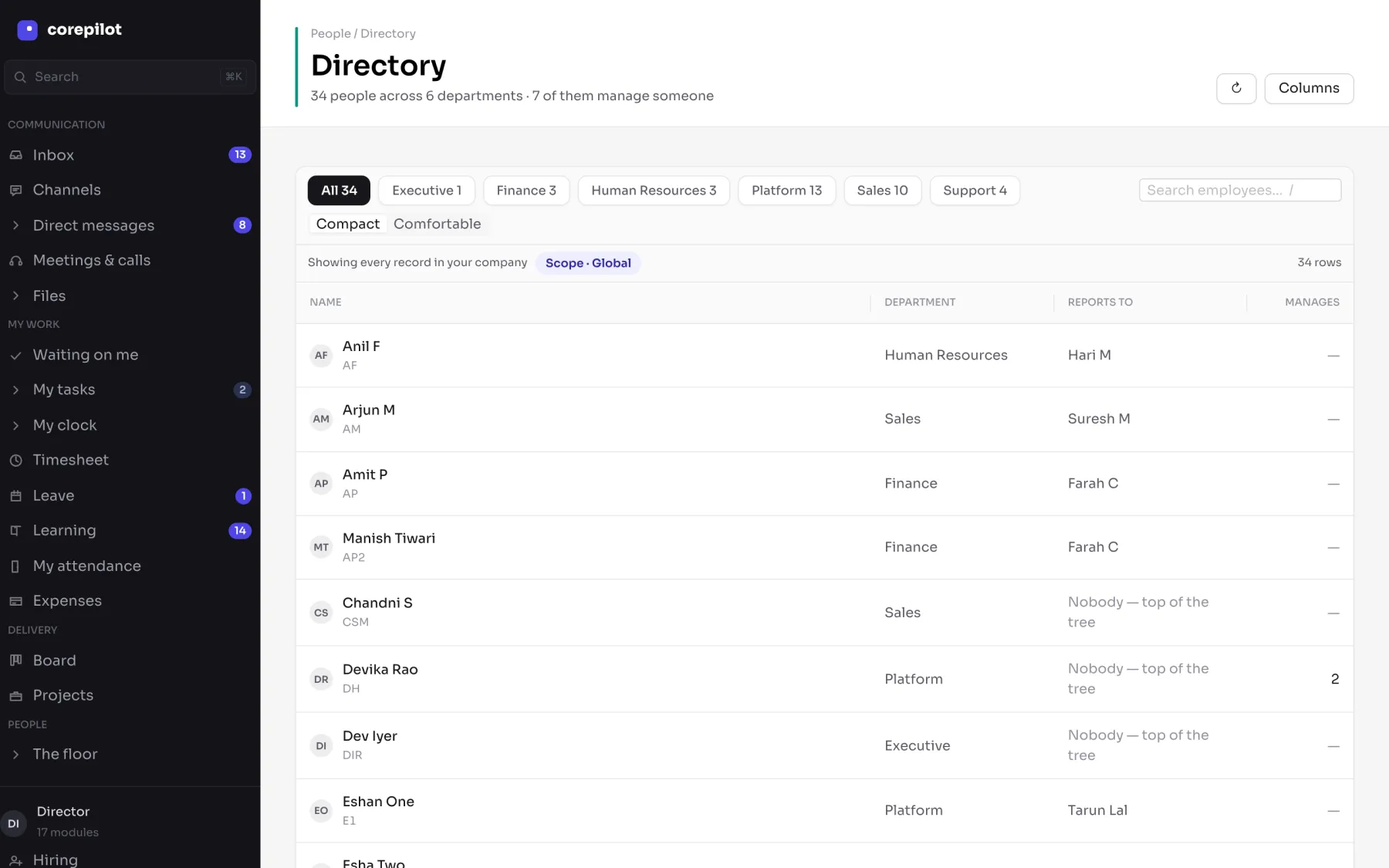
Who works here, when they worked, and what they were paid — held once. Attendance reads the employment record, payroll reads attendance, and the org chart decides who approves what.
What it costs today
- A new joiner re-keyed into four different files
- Leave balances that disagree between HR and the payslip
- Timesheets arriving as WhatsApp messages on the 26th
- Nobody sure who a person's approver actually is
Why it persists — The information is not missing — it is duplicated. Every copy drifts from the others at its own speed, and the month-end reconciliation is somebody's whole week.
What happens instead
One employment record, written once, that the other modules read rather than copy. A leave approval and a payslip line are the same row seen from two screens, so they cannot disagree.
- Employment record, documents and the org chart
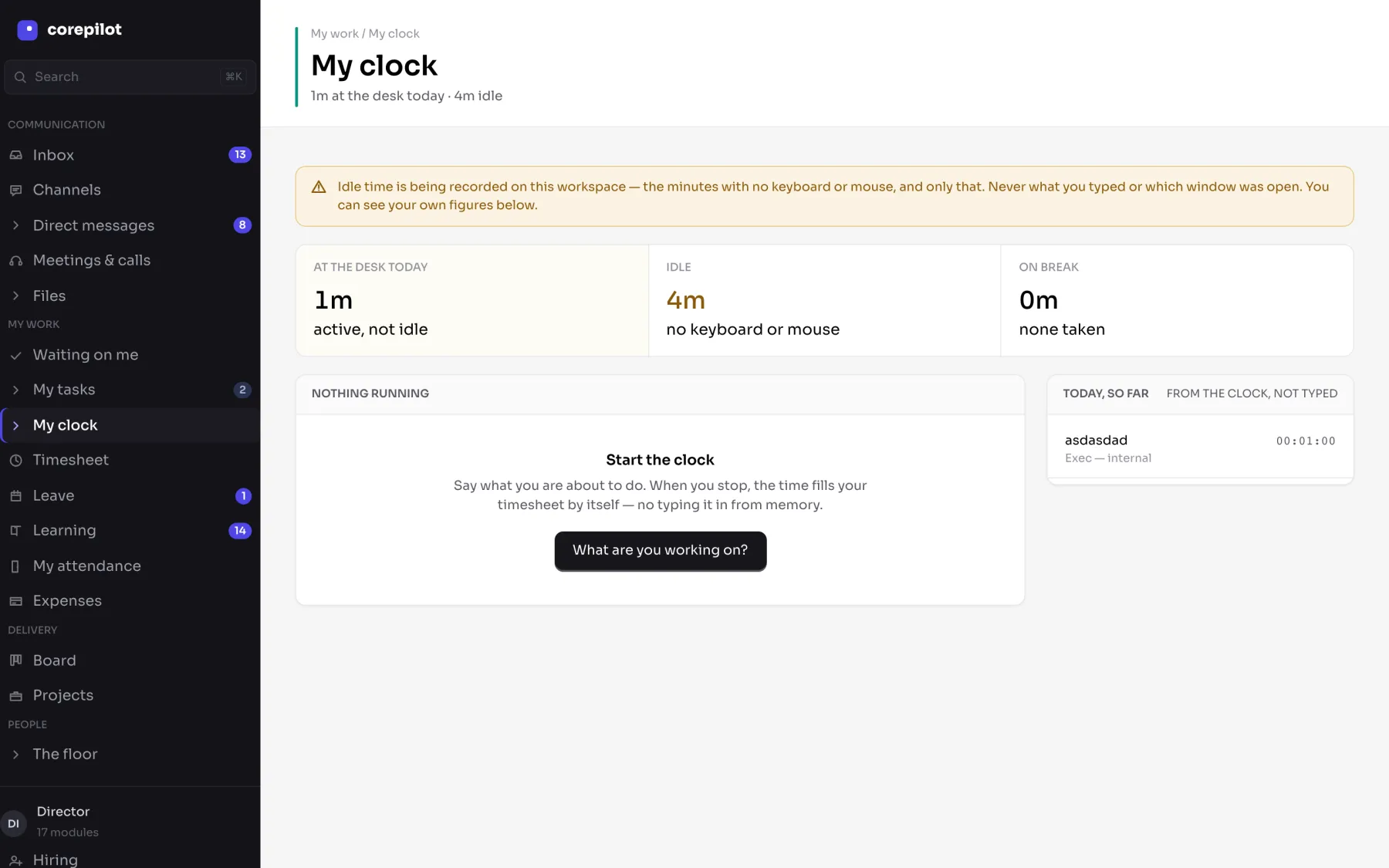
- Attendance, timesheets and four seeded leave types
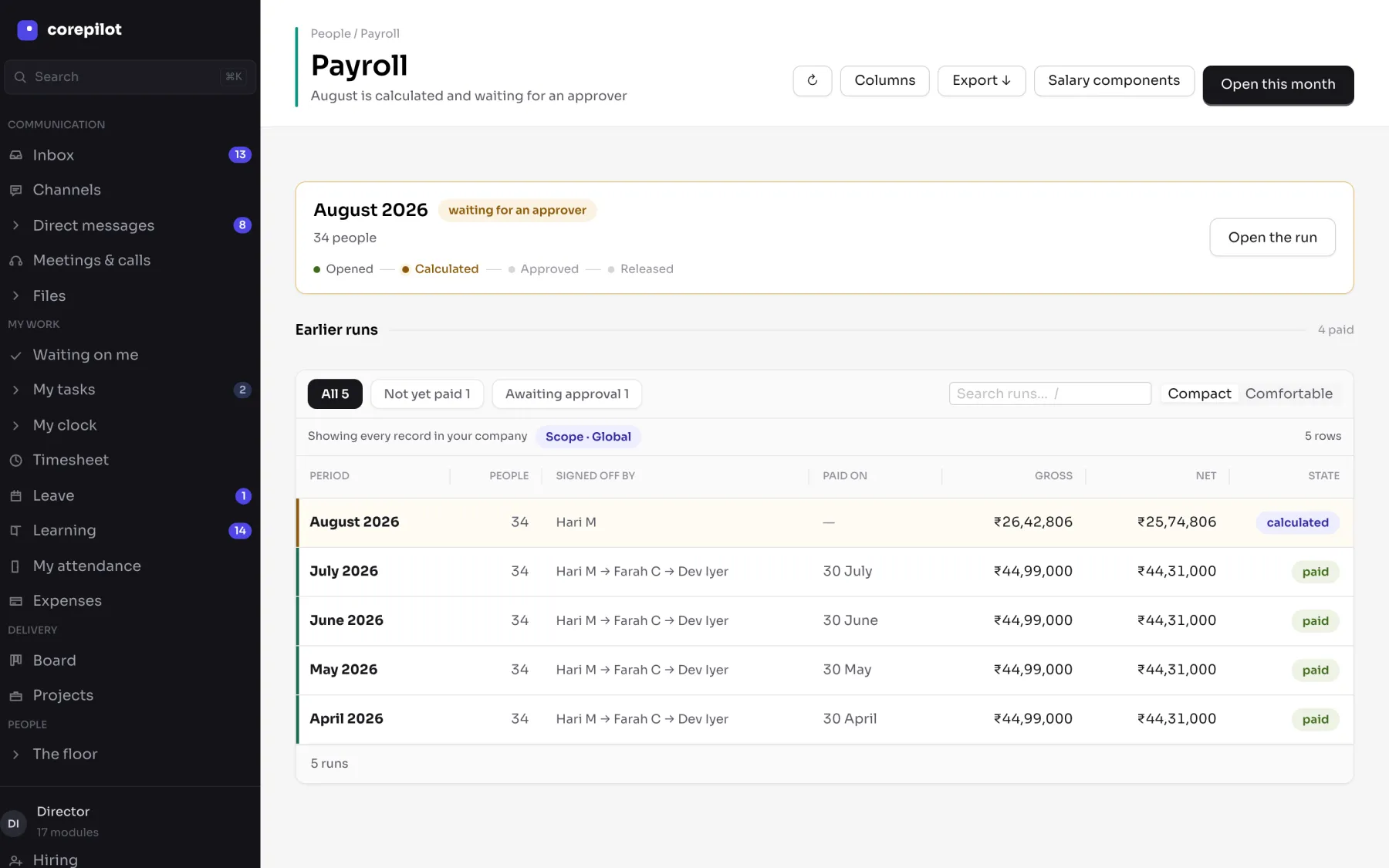
- A payroll run that is approved before it is paid
- Approvals routed by the org chart, not by a guess
Money
The rupee that was earned and the rupee that was invoiced are the same rupee.
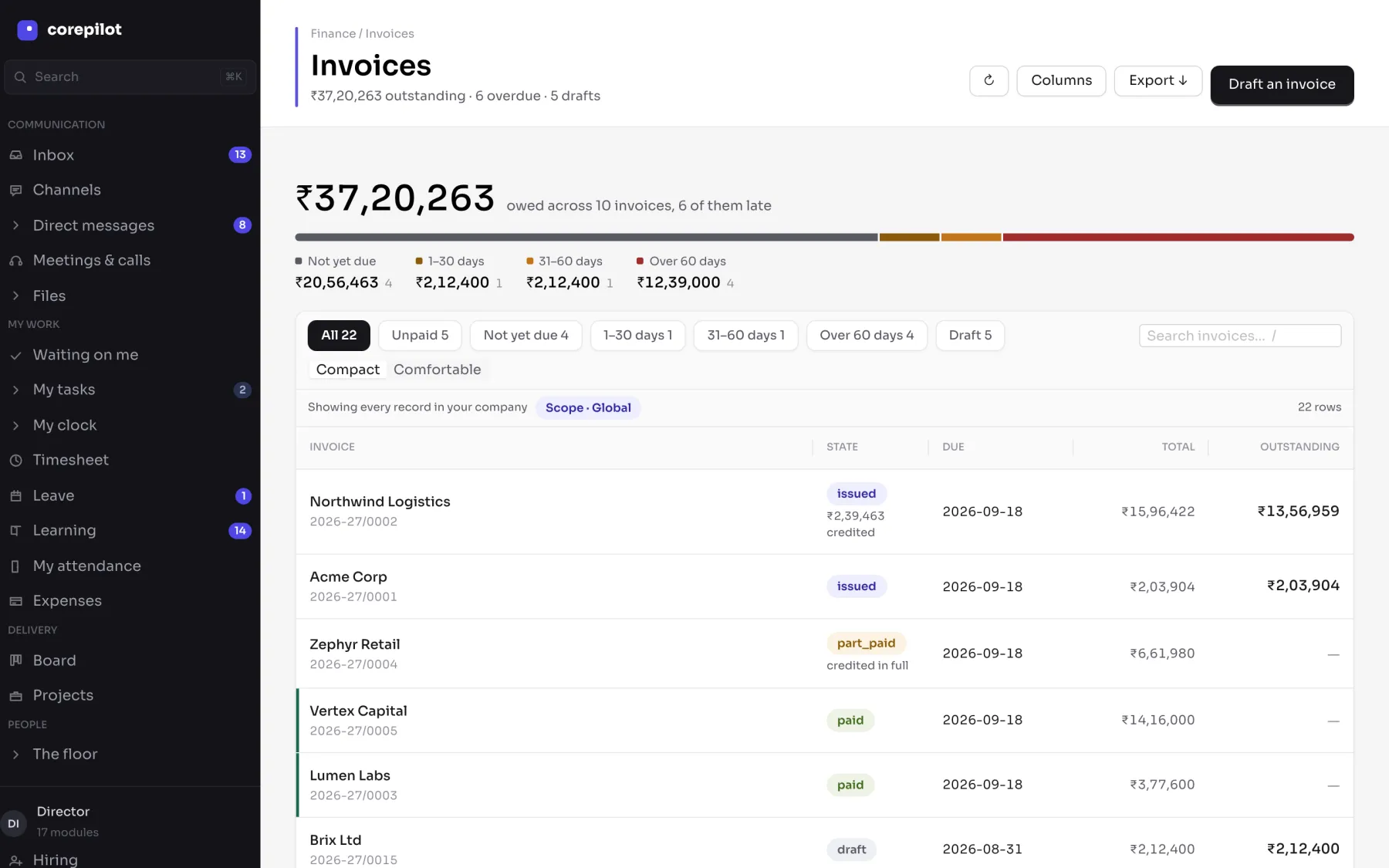
GST invoicing, receivables, purchase orders, vendor bills and the ledger under all of it. Every figure traces back to the hour or the purchase that produced it.
What it costs today
- Delivered work that never reached an invoice
- Purchase orders approved over email
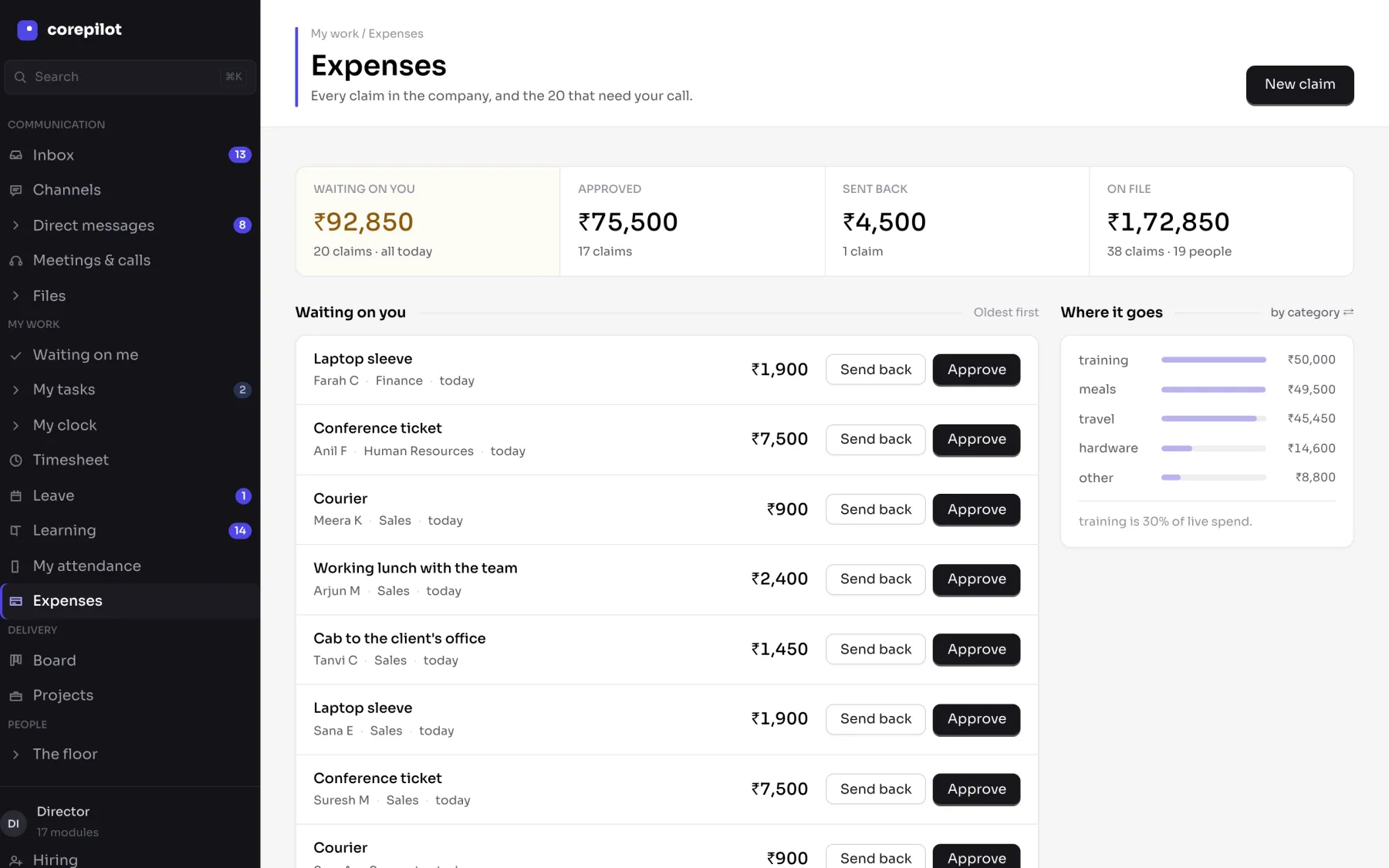
- Expense claims whose status nobody can state
- A receivables position that is a spreadsheet, updated on Tuesdays
Why it persists — Finance sits downstream of delivery but reads none of delivery's records. It bills from what somebody remembers to tell it, which is why the gap between delivered and billed is invisible until year end.
What happens instead
Invoicing reads the project ledger directly. What was booked, what was approved and what was billed are three views of one chain, and the difference between them is a number on a screen.
- GST invoices with financial-year numbering
- Receivables, ageing and what is overdue today
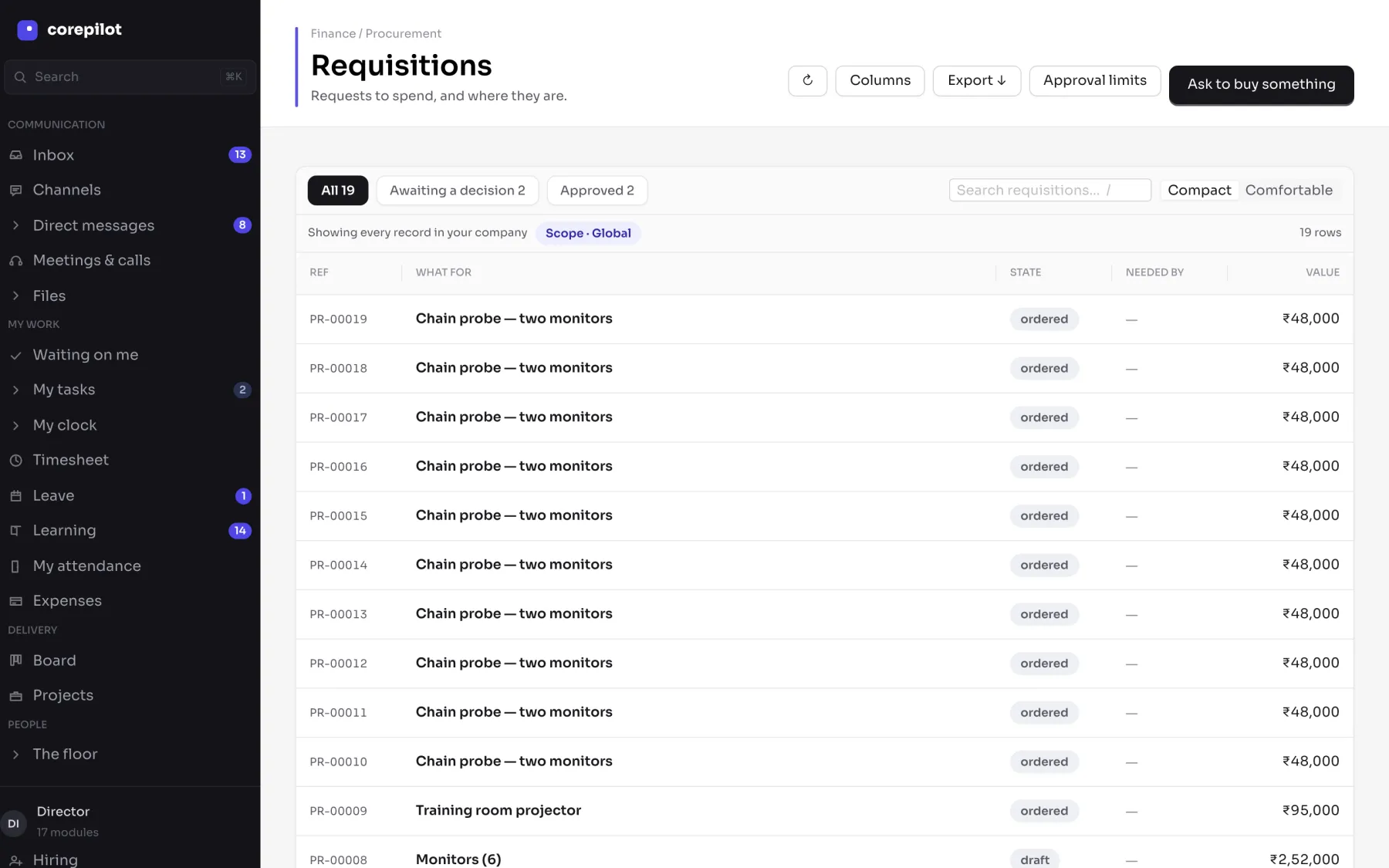
- Requisitions, POs, vendor bills and what is owed
- Claims, approvals and what is billable to a client
Delivery
An hour is booked once, and it is the same hour finance bills.
The work itself — projects, tickets, assets, and the conversation around all three. Kept next to the record it belongs to rather than in a chat tool nobody can search a year later.
What it costs today
- A scope decision made in a chat thread, six months ago
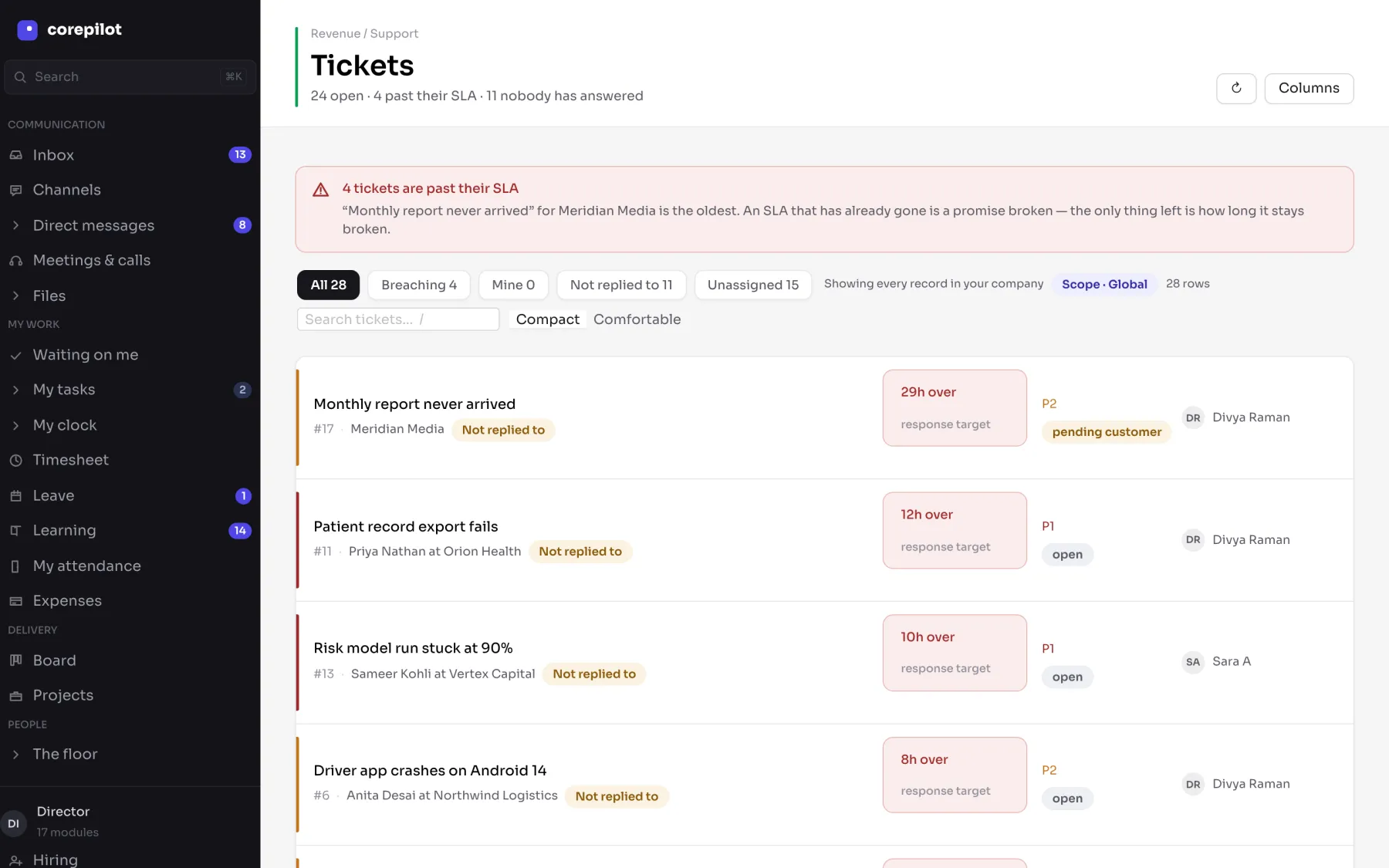
- Support requests arriving by email and getting lost
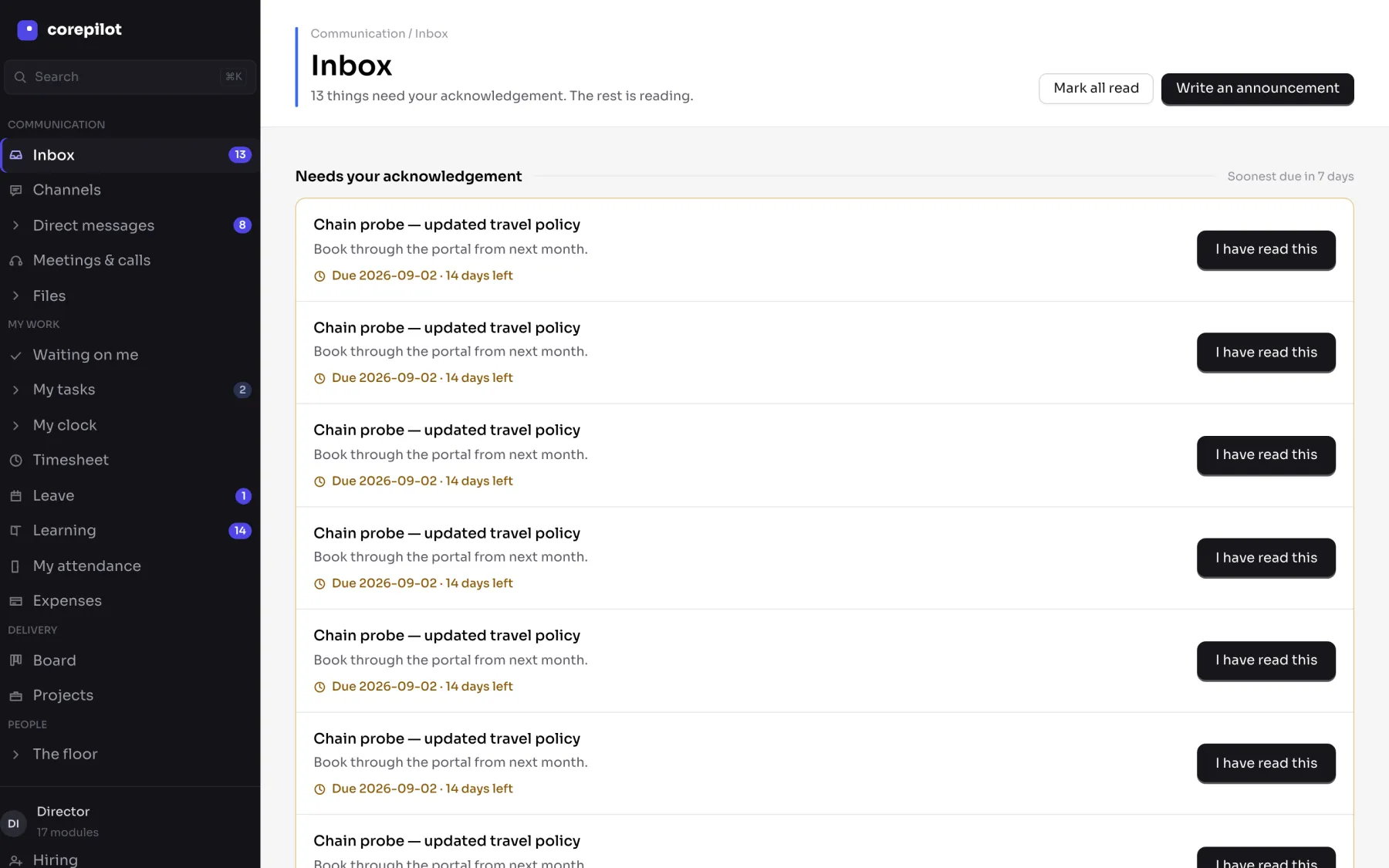
- Laptops and licences tracked on a shared sheet
- Utilisation that is a guess until somebody builds a report
Why it persists — Delivery generates the evidence every other department needs, and produces it in the least durable place available — a message, a call, somebody's memory. The record survives; the reasoning does not.
What happens instead
Hours, tickets, assets and the discussion all hang off the record they concern. A year later the question 'why did we agree to this?' has an answer attached to the thing it was agreed about.
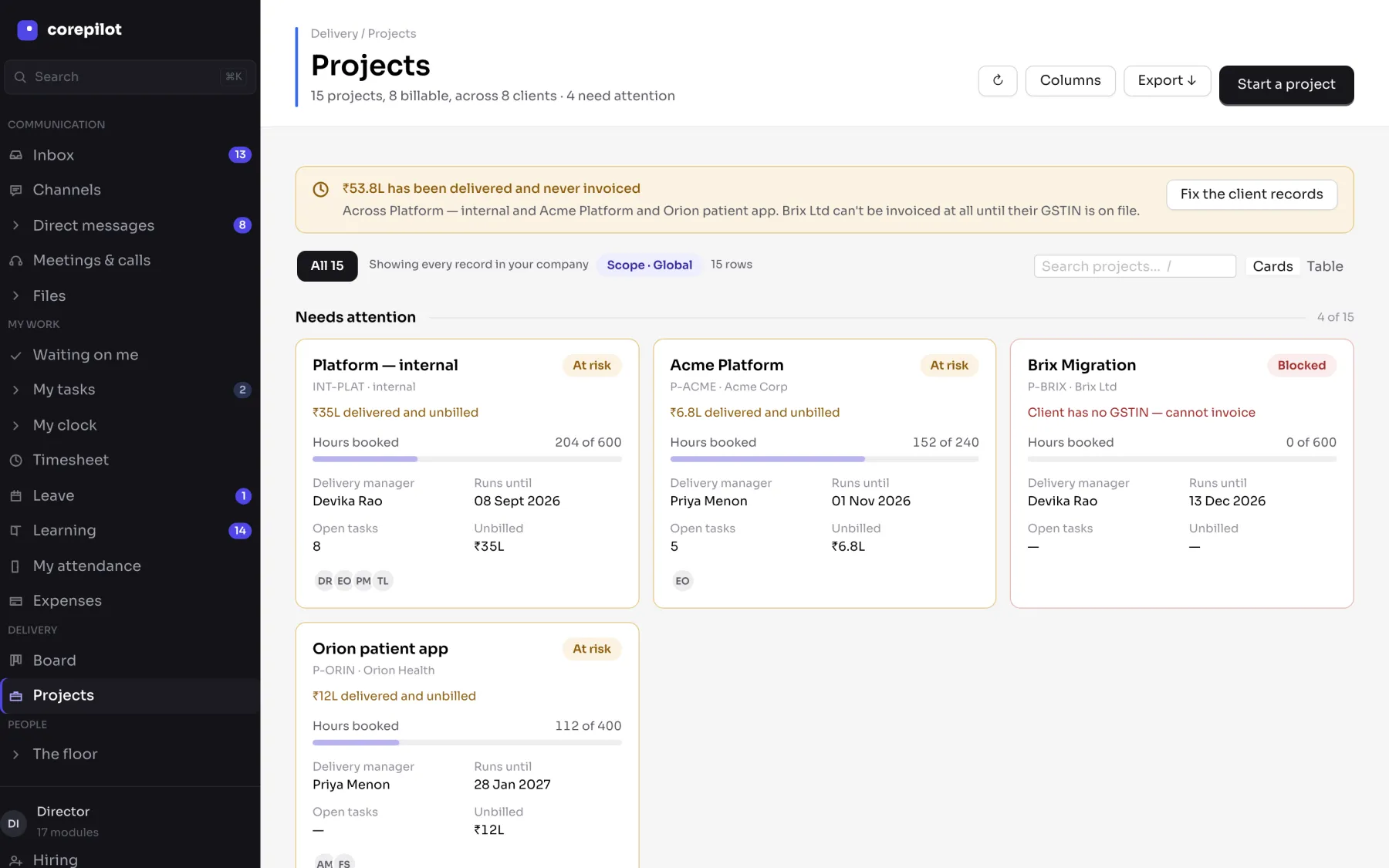
- Projects, task boards and hours booked against them
- Tickets raised from the client's own portal
- Assets, licences, rooms and visitors
- Channels, direct messages, meetings and files
The modules that do it
4 modules
Growth
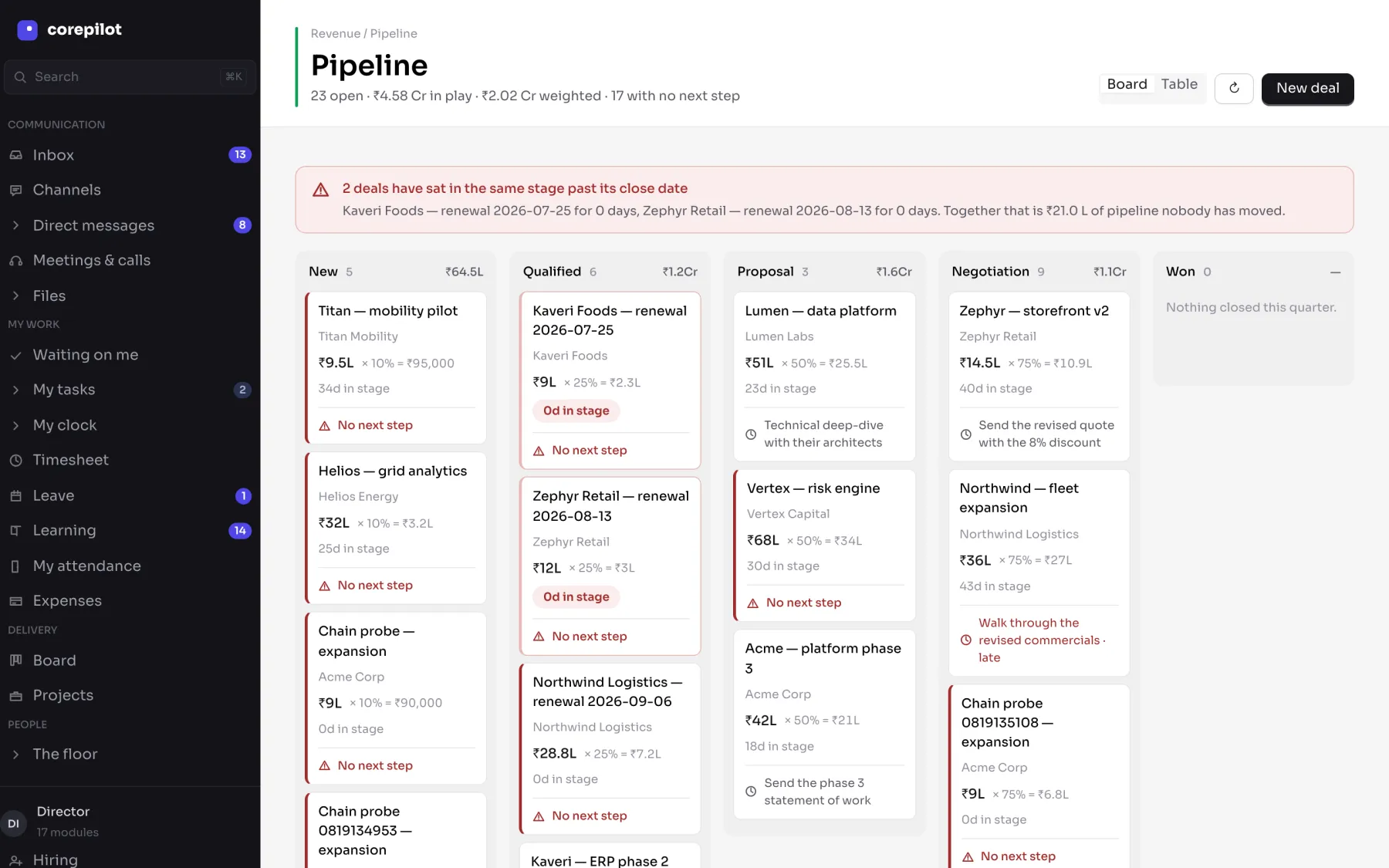
A bid, a win and a renewal are three points on one line, not three tools.
Winning the work and keeping the account: pipeline, estimates, call lists, campaigns and the renewal dates nobody wants to discover late.
What it costs today
- A pipeline that lives in one person's inbox
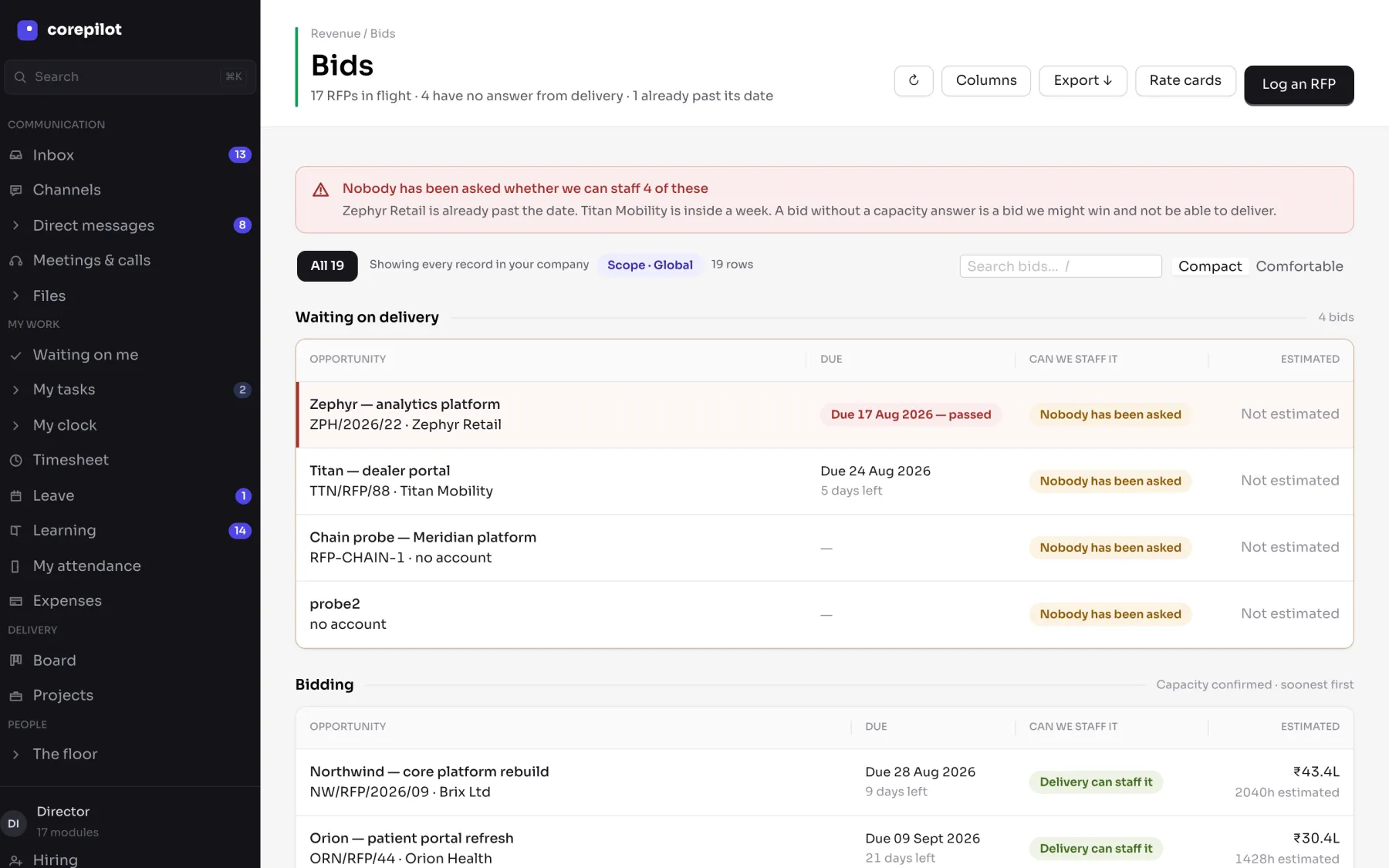
- Estimates nobody can trace back to a rate card
- Renewal dates found after they have passed
- Campaign spend with no line to the deals it produced
Why it persists — Sales is measured on what it closes and handed nothing about what was delivered. So the estimate that won the work and the hours that delivered it never meet, and the second year is priced from memory.
What happens instead
The estimate that won the deal stays attached to the project that delivers it. Renewal reads the delivery record, so the conversation starts from what actually happened rather than what was promised.
- Clients, contacts, pipeline and today's follow-ups
- Bids, estimates and quotations with the numbers behind them
- Call lists, outcomes and an enforced do-not-call list
- Renewals, business reviews and accounts at risk
The modules that do it
5 modules
Clients, contacts, pipeline and today's follow-ups.
Bids, estimates and quotations, with the numbers behind them.
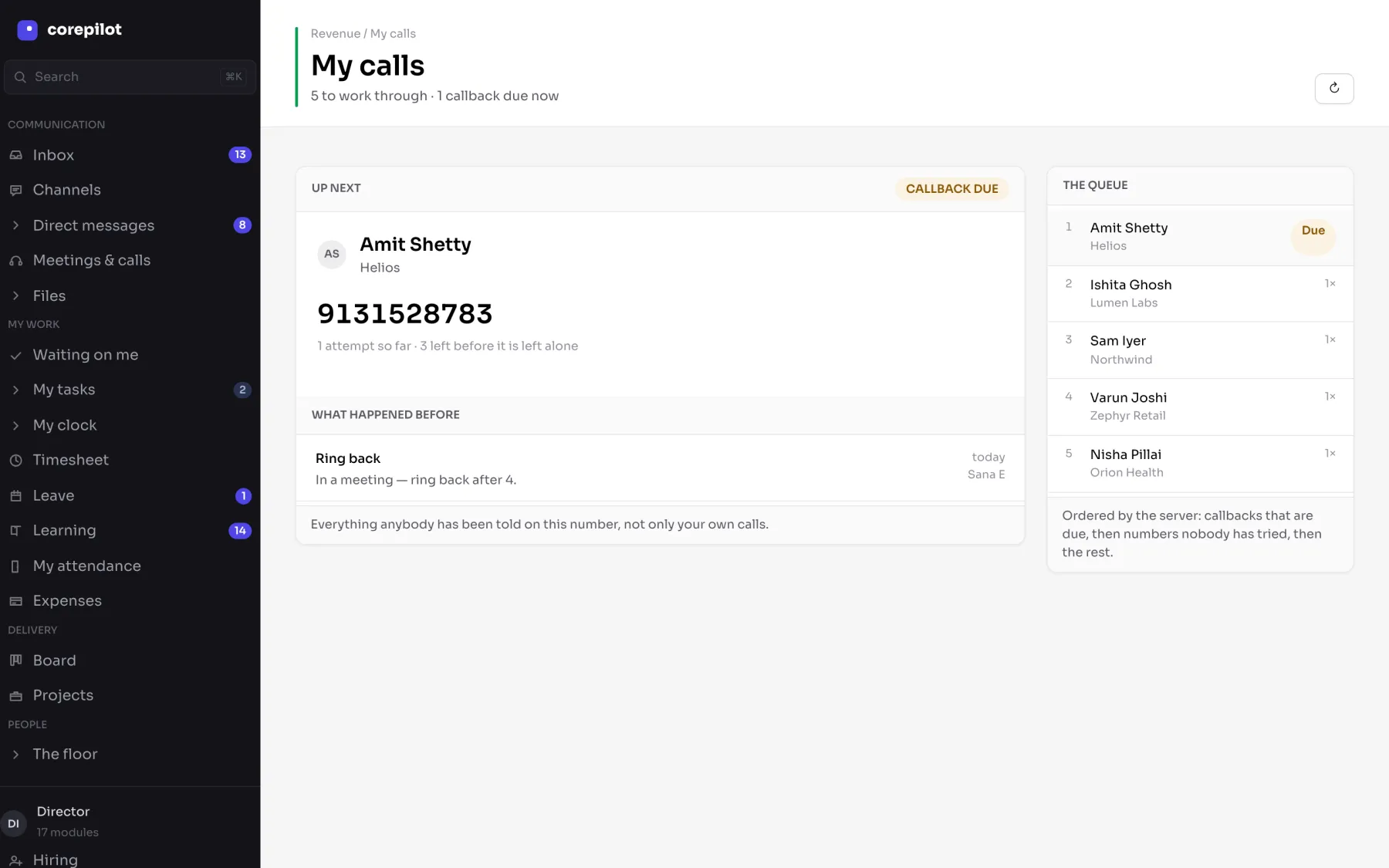
Call lists, outcomes and a do-not-call list that is enforced.
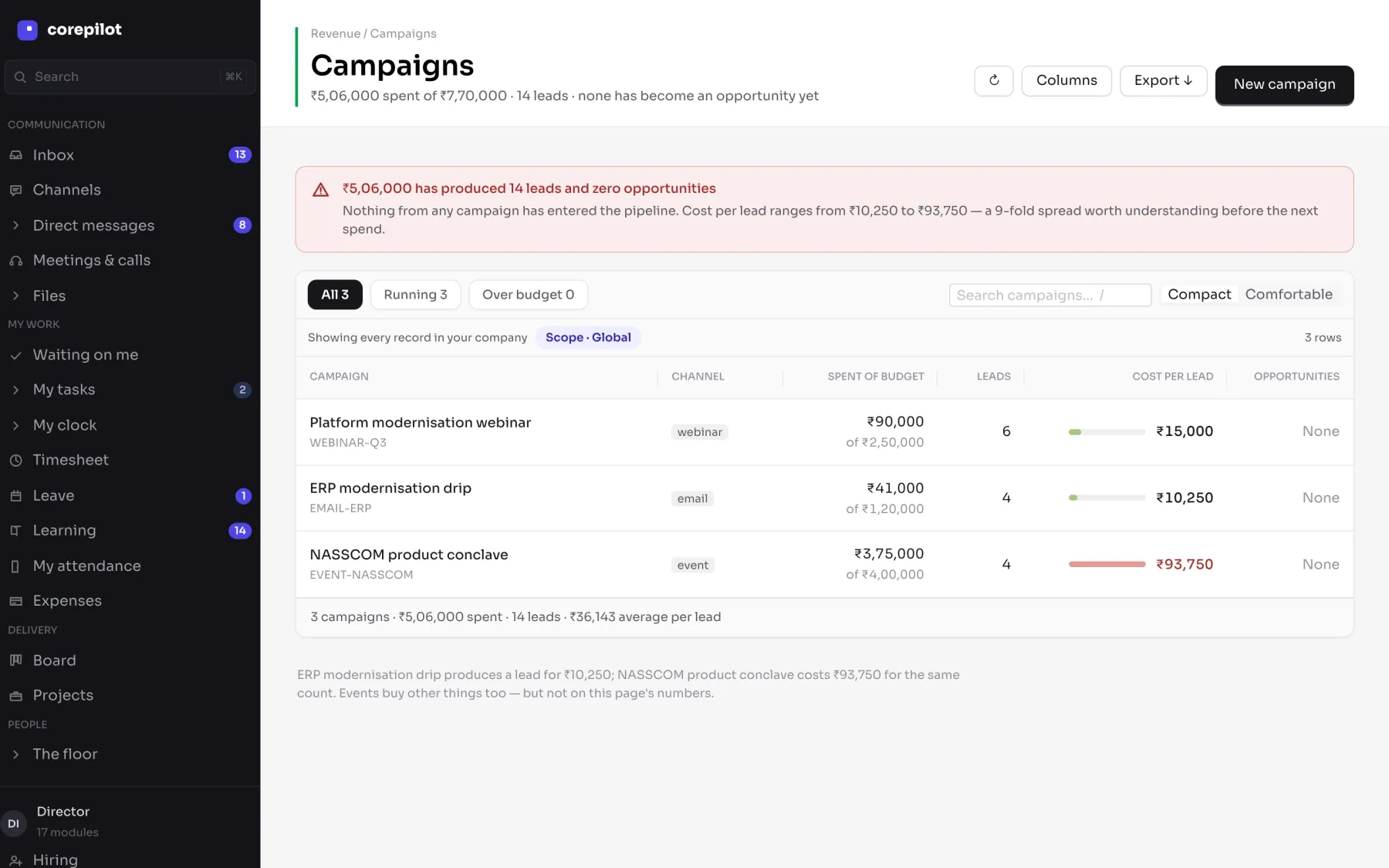
Campaigns and the leads they actually produced.
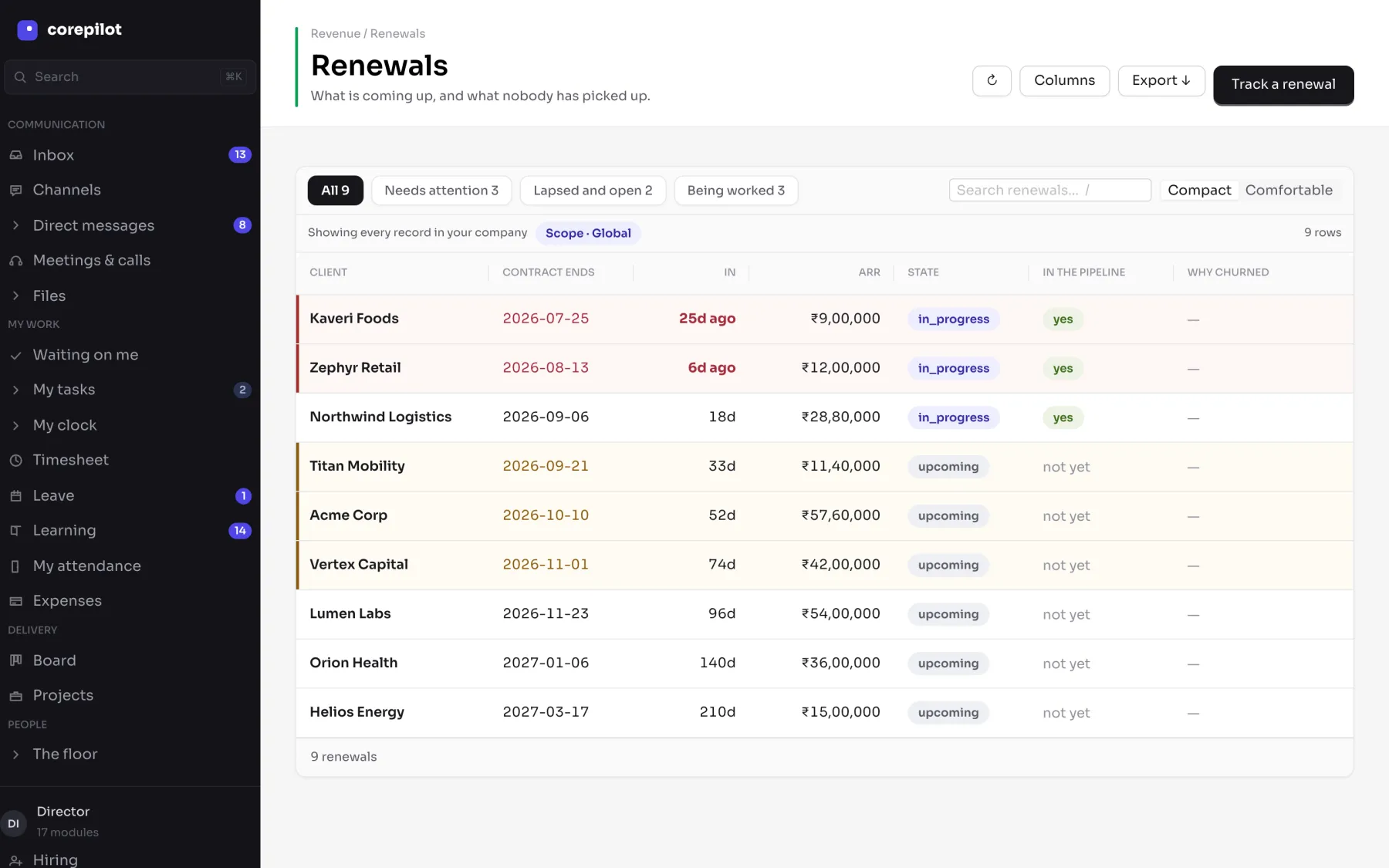
Renewals, business reviews and accounts at risk.
Across all of it
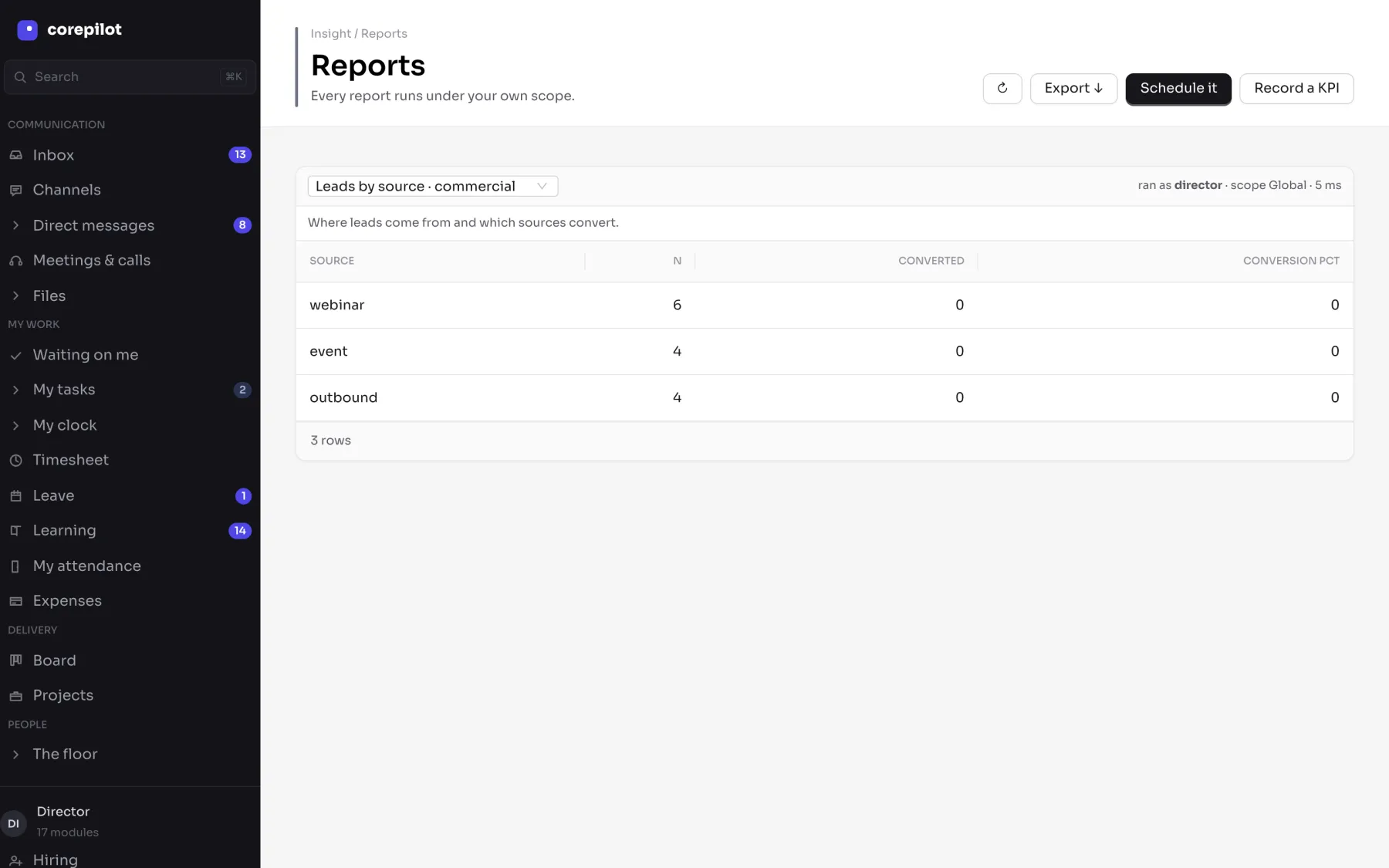
Reporting is not a seventeenth module you buy.
It reads the other fifteen through the same scope predicate the screens use. There is no second copy of the data and no second permission model to keep in step — which is the only way a report can be trusted not to leak.
Start with one. Add the rest when they matter.
Starter covers HR, attendance, projects, expenses and reporting. Payroll, CRM, support and finance arrive with Growth — and the product tells you when you have reached that point, rather than leaving you to find out.